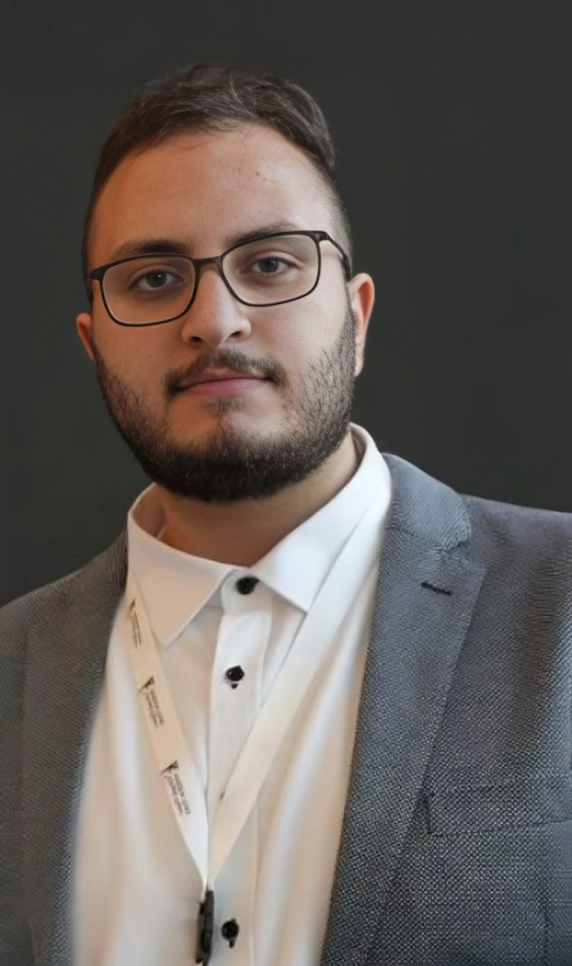
Ahmed Radwan

Associate Machine Learning Specialist · Vector Institute

I build trustworthy, reliable multimodal AI: benchmarks, preference alignment, bias mitigation, and agentic systems that can be evaluated, audited, and shipped.

Scroll Down

About Me

image

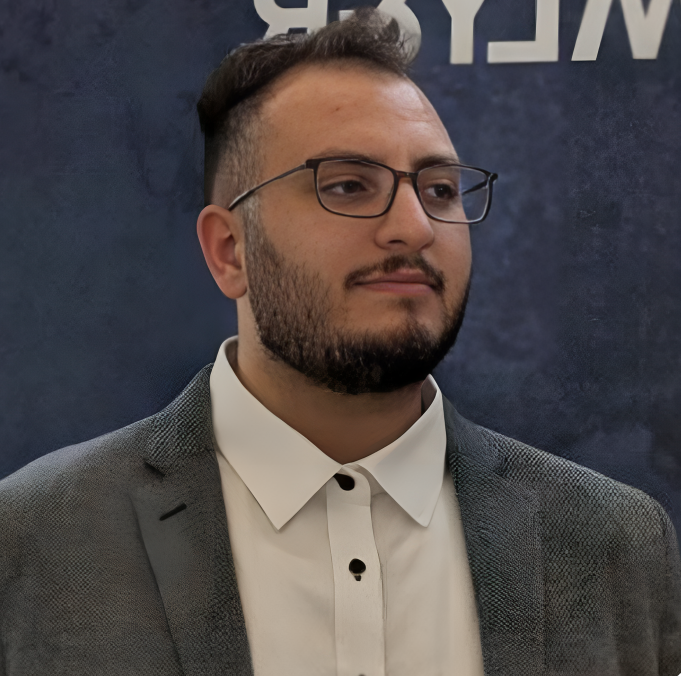
I'm Ahmed Radwan, an Associate Machine Learning Specialist on the AI Engineering team at the Vector Institute, contributing to AIXPERT (Horizon Europe) on explainable, accountable agentic AI. I hold an MSc in Computer Science from York University (Cum Laude), where I remain a Research Assistant with Prof. Hina Tabassum.

My work sits at the intersection of trustworthy / reliable AI and multimodality: evaluating audio-video understanding under fairness constraints, reducing hallucinations via preference learning, detecting and rewriting linguistic bias, and making agentic systems more transparent and auditable.

Trustworthy AI Multimodal LLMs Fairness & Bias Agentic Systems Evaluation & Benchmarks
  • Stack: PyTorch, Hugging Face, vLLM, LangGraph / LangChain, Accelerate, Whisper, Docker.
  • Methods: preference alignment (DPO / F-DPO), SSL, domain adaptation, quantization, RAG, fine-tuning (LoRA).
  • Domains: multimodal video understanding, LLM safety & factuality, bias detection, Wi-Fi sensing, MLOps.

Experience

Associate Machine Learning Specialist

Vector Institute, AI Engineering

On Vector’s AI Engineering team (with Dr. Shaina Raza), I work on multimodal evaluation, responsible AI tooling, and production-facing ML systems. This includes leading SONIC-O1 (benchmark, pipeline, and multi-agent system) and contributing to UnBias-Plus, Vector’s open-source bias detection and rewriting tool. My work is part of Vector’s contribution to the AIXPERT Horizon Europe consortium (17 partners) building an agentic, multi-layer GenAI backbone for explainable, accountable, and transparent AI.

Featured work: SONIC-O1, Multi-Agent, UnBias-Plus, AIXPERT.

Research Assistant

York University, LE-NGWN Lab

Research Assistant with Prof. Hina Tabassum at LE-NGWN Lab (I also completed my MSc there, Cum Laude). Current work covers self-supervised learning for Wi-Fi sensing, source-free domain adaptation for multi-user CSI, and AI-driven CSI compression/prediction for next-generation wireless systems (IEEE TNNLS, IEEE IoT Journal, IEEE COMST). Previously supported the department as a Graduate Teaching Assistant and as a member of the T&P Adjudication Committee.

Research Engineer (VSRP)

KAUST, Information Science Lab

As a Research Intern under Prof. Tareq Y. Al-Naffouri in the Information Science Lab, I developed a real-time feedback algorithm for tracking Rak'ah completion during Salah using smartphone IMU sensors. I processed and classified sensor data for motion recognition, ensuring accurate interpretation of user movements. Additionally, I deployed and enhanced an Android app to provide real-time accuracy and error detection, improving the overall reliability and user experience of the application.

Research Assistant

KAUST, Communication Theory Lab

As a Research Assistant under Prof. Mohamed-Slim Alouini in the Communication Theory Lab, I optimized energy efficiency in AI tasks by employing quantization techniques to reduce model complexity and data transmission. Additionally, I analyzed centralized, federated, and split learning methods for NLP sentiment analysis, focusing on performance, privacy, and scalability. Furthermore, I led research efforts that merged AI with wireless communications, testing models on real-world noisy communication channels.

Research Engineer

Asas.ai

I designed and implemented LLM-based applications with a focus on Arabic language processing, conducting a comprehensive review and analysis of Arabic instruction-tuning datasets to enhance model performance.

Head of AI Unit

Drone and Robotics Aziz Group at KAU

I led a team of 50 members, guiding their development and preparing them for hackathons participation. In addition to managing the team, I conducted bootcamps on Introduction to AI, Computer Vision, and TinyML, equipping participants with essential skills. I also spearheaded the AI team for DRAG SUAS 2024, where we achieved an impressive 16th-place ranking.

Artificial Intelligence Intern

KAUST

I gained experience in deep learning, including autoencoders, VAEs, and GANs with a focus on unsupervised and generative modeling. I also learned reinforcement learning for optimizing policies in dynamic environments, graph neural networks for recommendation systems, and natural language processing (NLP) techniques such as text and sentiment analysis and language modeling.

Teaching Assistant

KAUST Academy

I assisted in teaching the Introduction to Artificial Intelligence course, covering topics such as calculus, linear algebra, machine learning, and deep learning. Additionally, I supported the Advanced Artificial Intelligence course, which focused on CNNs, data loading, autoencoders, segmentation, and object detection.

Publications

Peer-reviewed venues and preprints: multimodal evaluation, trustworthy AI, and wireless sensing.

Contrastive Predictive Coding with Compression for Enhanced Channel State Feedback in Wireless Networks

IEEE TNNLS (2026)

Ahmed Y. Radwan, Fahad Syed Muhammad, Matthew Baker, Hina Tabassum

First author of a research paper enhancing CSI feedback in 3GPP’s next release using AI-driven compression. We propose two CPC-based architectures to tackle data aging and channel variations, achieving superior SGCS performance on industry datasets (Nokia, Oppo, CATT). Additionally, we explore GRU pruning for real-time deployment and discuss future directions like split learning and adaptive online strategies.

MU-SHOT-Fi: Self-Supervised Multi-User Wi-Fi Sensing with Source-free Unsupervised Domain Adaptation

IEEE IoT Journal (2026)

Ahmed Y. Radwan, Hina Tabassum

First author of MU-SHOT-Fi, a source-free unsupervised domain adaptation framework for single- and multi-user Wi-Fi sensing. We introduce permutation-invariant set prediction with occupancy-weighted information maximization and rotation-based spatial self-supervision, recovering multi-user activity recognition under large domain shifts on WiMANS and Widar 3.0.

SONIC-O1: A Real-World Benchmark for Evaluating Multimodal Large Language Models on Audio-Video Understanding

Preprint (2026)

Ahmed Y. Radwan, Christos Emmanouilidis, Hina Tabassum, Deval Pandya, Shaina Raza

First author of SONIC-O1, a fully human-verified real-world audio-video benchmark with 4,958 annotations across 13 conversational domains. We evaluate multimodal models on video summarization, evidence-grounded QA, and temporal event localization, and release an extensible evaluation suite plus a companion multi-agent system for evidence-based reasoning and verification.

Sustainable Open-Source AI Requires Tracking the Cumulative Footprint of Derivatives

ICML 2026 Spotlight

Shaina Raza, Iuliia Zarubiieva, Ahmed Y. Radwan, Nathaniel Lesperance, Deval Pandya, Sedef Akinli Kocak, Graham W. Taylor

Co-author of an ICML position paper arguing that compute efficiency alone is insufficient for open-source AI sustainability: lower per-run costs can raise aggregate footprint across fine-tunes, adapters, and forks. We propose Data and Impact Accounting (DIA), a lightweight transparency layer for carbon/water metadata, pipeline measurement, and public dashboards over model lineages.

Reducing Hallucinations in LLMs via Factuality-Aware Preference Learning

ACL 2026 Findings

Sindhuja Chaduvula, Ahmed Y. Radwan, Azib Farooq, Yani Ioannou, Shaina Raza

Co-author of F-DPO, a factuality-aware extension of DPO that uses binary factuality labels with label flipping and a factuality margin. Across seven open-weight LLMs (1B-14B), it reduces hallucination rates (e.g., 5× on Qwen3-8B) and improves TruthfulQA without a reward model or multi-stage training.

UnBias-Plus: Detect, Explain, and Rewrite Bias

Preprint (2026)

Ahmed Y. Radwan, Ahmed ElKady, Sindhuja Chaduvula, Mohamed Hafez, Amrit Krishnan, Shaina Raza

First author of Vector’s open-source Safe AI toolkit for segment-level bias detection, span localization, neutral rewriting, and decision rationales, released publicly with a live browser demo, Python/CLI/REST APIs, and coverage in Vector’s launch announcement.

From Features to Actions: Explainability in Traditional and Agentic AI Systems

Future Technologies Conference (FTC) 2026

Sindhuja Chaduvula, Jessee Ho, Kina Kim, Aravind Narayanan, Ahmed Y. Radwan, Mahshid Alinoori, Muskan Garg, Dhanesh Ramachandram, Shaina Raza

Co-author. We show attribution methods (e.g., SHAP/LIME) work for static predictions but fail to diagnose agentic trajectory failures, and motivate trace-based, rubric-grounded explainability, finding state-tracking inconsistency 2.7× more common in failed runs.

Transparency in Agentic AI: A Survey of Interpretability, Explainability, and Governance

EngrXiv Preprint (2026)

Shaina Raza, Ahmed Y. Radwan, Sindhuja Chaduvula, Mahshid Alinoori, Christos Emmanouilidis

Co-author of a survey connecting interpretability, explainability, and governance for LLM-based agents. We propose a five-axis taxonomy and the Minimal Explanation Packet (MEP) for audit-ready trajectory-level transparency evidence.

A Tutorial-cum-Survey on Self-Supervised Learning for Wi-Fi Sensing: Trends, Challenges, and Outlook

IEEE COMST (2025)

Ahmed Y. Radwan, Mustafa Yildirim, Navid Hasanzadeh, Hina Tabassum, and Shahrokh Valaee

First author of a comprehensive survey on Wi-Fi sensing, where we explore its evolution from communication routers to sensing devices. Our work delves into channel state information (CSI) extraction, dataset comparisons, and the impact of mobile objects on CSI. We discuss preprocessing techniques for feature extraction, highlight the role of machine learning (ML) and self-supervised learning (SSL) in Wi-Fi sensing, and provide a quantitative analysis of contrastive and non-contrastive learning approaches. The paper concludes with insights into emerging technologies and future research opportunities in this field

Humanibench: A Human-Centric Framework for Large Multimodal Models Evaluation

Preprint (2025)

Shaina Raza, Aravind Narayanan, Vahid Reza Khazaie, Ashmal Vayani, Ahmed Y. Radwan, Mukund S Chettiar, Amandeep Singh, Mubarak Shah, Deval Pandya

Co-author of Humanibench, a unified evaluation framework for multimodal models grounded in human-centered principles (fairness, ethics, inclusivity, empathy, robustness), spanning realistic visual contexts and multiple tasks (e.g., VQA, multilinguality, visual grounding, empathetic captioning).

TinyML NLP Scheme for Semantic Wireless Sentiment Classification with Privacy Preservation

EuCNC & 6G Summit 2025

Ahmed Y. Radwan, Mohammad Shehab, Mohamed-Slim Alouini

First author of a study on privacy-preserving, energy-efficient NLP for edge devices. We propose semantic split learning (SL) as a TinyML framework, outperforming FL and CL in energy efficiency and privacy, with significantly higher reconstruction error and lower CO2 emissions.

SARD: A Human-AI Collaborative Story Generation

HCI International 2024

Ahmed Y. Radwan, Khaled M. Alasmari, Omar A. Abdulbagi, Emad A. Alghamdi

First author of SARD, a drag-and-drop interface for multi-chapter story generation using LLMs. Our study shows that while node-based visualization aids mental modeling, it adds cognitive load as stories grow. We also find AI-generated stories lack lexical diversity, highlighting patterns and limitations for future human-AI co-writing tools.

Addressing Bias Through Ensemble Learning and Regularized Fine-Tuning

Preprint (2024)

Ahmed Y. Radwan, Layan Zaafarani, Jetana Abudawood, Faisal AlZahrani, Fares Fourati

First author of a preprint proposing a novel approach to reduce bias in AI models with limited data. Method combines fine-tuning, ensemble learning, and knowledge distillation, demonstrating improved fairness on CIFAR-10 and HAM10000 datasets.

Projects

Open systems and benchmarks in trustworthy multimodal AI: demos, code, and papers.

SARD: Images-Inspired Narratives

Visual interface for human-AI collaborative story generation: design, implementation, and user studies (HCI International 2024).

Bias Mitigation via Ensembles

Fine-tuning, ensemble learning, and knowledge distillation to improve fairness under limited data (CIFAR-10, HAM10000).

Skin Cancer Classification

CNN-based medical image classification pipeline with careful data loading and evaluation.

PerfectPrayer

PerfectPrayer

Real-time Rak'ah tracking on Android phones and watches using IMU sensing for motion recognition and error detection.

Fairness-aware medical imaging

Fairness-Aware Medical Imaging

Adversarial and balanced fine-tuning to reduce demographic bias in chest X-ray classification while preserving diagnostic accuracy.

Talks & Activities

Selected talks first; courses and competitions kept brief for context.

Talks

  • TMLS 2026: SONIC-O1

    10th Annual Toronto Machine Learning Summit: omnimodal evaluation, temporal localization gaps, and demographic disparities in MLLMs.

  • AI4Good @ Vector: UnBias-Plus

    Internal AI4Good talk on detecting, explaining, and rewriting biased language in content and training data.

Competitions & Mentoring

Contact Me

Open to research collaborations and roles in trustworthy multimodal AI.

Include your name and email. I'll reply to messages that reach this form.

Send Me a Message.